
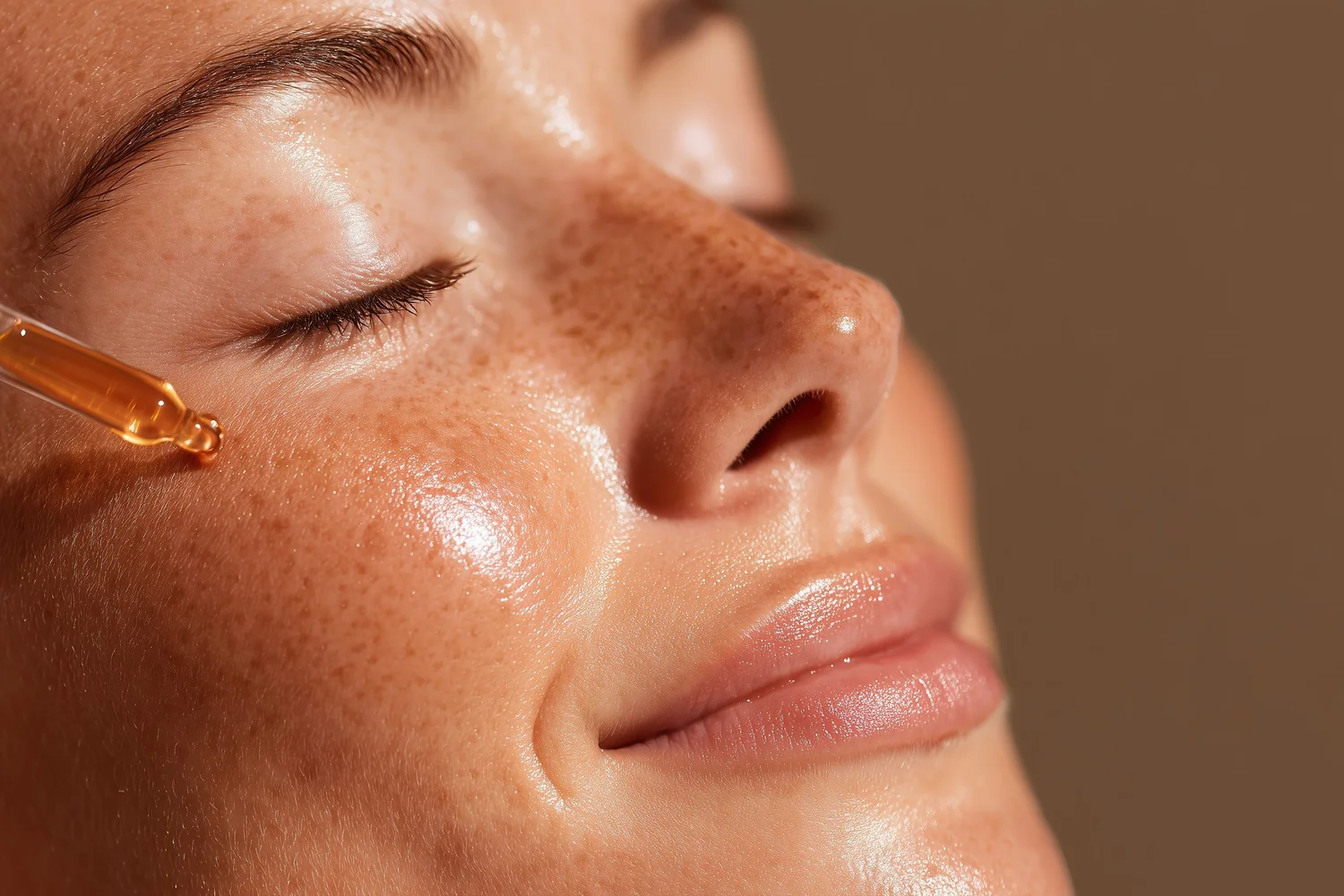
Microneedling and exosome products are often marketed together under the broad idea of “regenerative” skin care. The pairing sounds simple: microneedling creates controlled micro-injuries, and a topical product is applied as part of the treatment protocol. The important questions are less simple. What is in the product? How is it represented for use? What evidence exists for that exact formulation and protocol? Does the proposed benefit justify the added product, cost, and uncertainty?
This guide is designed to support an informed consultation. It does not establish that every exosome product is appropriate, equivalent, authorized, or proven.
What are exosomes?
Exosomes are small membrane-bound extracellular vesicles involved in communication between cells. In aesthetic marketing, however, “exosome” is not one standardized treatment. Products may differ in source, manufacturing, purification, composition, storage, concentration, and intended use. Some products may contain extracellular vesicles or conditioned media rather than one uniform, independently verified ingredient.
The category name is not enough
Evidence for one named product, source, dose, or protocol cannot automatically be transferred to another. Product identity and traceability matter before clinical claims are discussed.
Why pair an exosome product with microneedling?
Microneedling creates controlled microchannels and initiates a wound-healing response. Exosome products are sometimes proposed as topical adjuncts after needling, with the goal of supporting skin quality or recovery. That rationale does not make the adjunct necessary, and it does not mean the product removes the risks or visible recovery associated with microneedling.
The underlying procedure still determines much of the experience: treatment depth, device, technique, skin characteristics, treatment area, and aftercare all influence redness, sensitivity, dryness, swelling, and barrier recovery.
What does the human evidence show?
The clinical evidence is developing, but it remains heterogeneous. Studies use different exosome sources, products, application methods, procedures, endpoints, and follow-up periods. Many are small, and some combine exosomes with microneedling or radiofrequency microneedling, making it difficult to isolate what the product contributed.
Exosomes versus PRP
A small split-face trial involving 15 participants compared topical exosomes with PRP after RF microneedling for photoaged skin. Both sides improved, with no significant difference between the two study arms.
Texture and pores
A three-person case series reported improvement after microneedling plus one named exosome product. The sample is far too small to establish broad effectiveness or safety.
Promising, not settled
Reviews describe encouraging early findings while emphasizing limited standardized trials, product variation, short follow-up, and the need for stronger comparative evidence.
The practical conclusion is not that the category “works” or “does not work.” It is that any recommendation should be product-specific, concern-specific, and honest about uncertainty.
Exosomes and PRP are not interchangeable
A Vampire Facial with PRP uses platelet-rich plasma prepared from the client's own blood. An exosome product is manufactured from an external source and brings different questions about composition, donor or source material, processing, quality control, storage, and regulatory classification.
Neither option should be described as automatically superior. A small study finding similar outcomes between one exosome protocol and PRP does not establish equivalence between every product or prove that either adjunct is necessary for every microneedling treatment.
Compare microneedling, a Vampire Facial, and exosome-supported care side by side if you are still deciding which treatment conversation fits your goals.

How Health Canada classifies topical exosome products
Health Canada's current notice explains that classification depends on the product's claims, composition, level of action, and represented use. A topical product containing human-derived exosomes, extracellular vesicles, or human cell-conditioned media may be regulated as a cosmetic or as a drug.
The notice also makes two distinctions that are especially relevant to aesthetic treatment:
- A product represented for administration through microneedling or injection is not considered a cosmetic.
- Submitting a cosmetic notification does not constitute Health Canada approval or confirmation that the product complies with every legal requirement.
Health Canada also notes potential risks from human-derived materials, including infectious-disease or adventitious-agent transmission, and warns against unsubstantiated therapeutic claims. Because classification is product-specific, clients should not rely on a general statement that an “exosome product” is approved.
Questions to ask about the exact product
- What is the product name and manufacturer? Ask for enough information to identify the exact formulation rather than accepting a category label.
- What is its source and composition? Human-, animal-, plant-, platelet-, and synthetically derived products are not interchangeable.
- How is it represented for use? Ask whether the proposed application matches the label and manufacturer instructions.
- What is its Canadian regulatory status? If it is represented as a drug or natural health product, ask how authorization can be verified. If it is represented as a cosmetic, remember that notification is not approval.
- What human evidence supports this exact product and protocol? Laboratory research or evidence for another brand is not the same as clinical evidence for the proposed treatment.
- What does it add beyond microneedling alone? Request a realistic explanation of the expected benefit, uncertainty, added cost, and alternatives.
- How is it stored and traced? Product handling, lot information, expiry, sterility, and adverse-event procedures should be clear.
Recovery still belongs to the procedure
An exosome add-on should not be presented as eliminating recovery. Follow the individualized preparation and aftercare instructions supplied by the treating clinic. Avoid adding unapproved products or changing aftercare independently while the skin barrier is recovering.
Contact the treating clinic promptly for symptoms that are unexpected, worsening, or outside the recovery plan you were given. Urgent symptoms should be assessed through the emergency pathway explained during consent rather than managed through general online advice.
Frequently asked questions
Are exosomes the same as PRP?
No. PRP is prepared from your own blood. Exosome products are manufactured products with product-specific sources, formulations, evidence, handling, and regulatory considerations.
Do exosomes make microneedling work better?
Early studies are encouraging, but they use different products and protocols and often involve small groups. Their findings cannot be generalized to every product, treatment combination, or skin concern.
Are topical exosome products approved by Health Canada?
There is no category-wide answer. Health Canada classifies products according to their claims, composition, level of action, and represented use. Cosmetic notification is not approval, and products represented for administration through microneedling or injection are not considered cosmetics.
Does an exosome add-on remove microneedling downtime?
No. The needling procedure, treatment depth, skin response, combination protocol, and aftercare still shape recovery.
Can I choose an adjunct during the appointment?
A product-specific discussion should happen before consent. You should have time to review what is being used, why it is recommended, what evidence supports it, what it costs, and what alternatives are available.
Sources and further reading
- Health Canada: Classification of topical products containing human-derived exosomes, extracellular vesicles, or cell-conditioned media
- Split-face trial comparing exosomes and PRP after RF microneedling for photoaged skin
- Case series of microneedling plus a named exosome product for pores and texture
- Review of clinical applications of exosomes in cosmetic dermatology
This article provides general education and does not replace an individualized assessment or medical advice. Products, evidence, classification, and treatment recommendations can change.